Tokyo City Tours With Kids: What Age, Which Tour, and What to Expect

Every Tokyo city tour on this site welcomes children except one: the go-kart ride through Shibuya requires a physical driving licence and is 18 and over by law. Every other tour, the Hato Bus half-day, the full-day coach, both walking tours, the bike ride and every private option, sets no minimum age at all. What actually decides whether a day works is less about birthdays and more about how long a young child can sit through a nine-hour coach circuit, tolerate a crowded observation deck, or manage a station's stairs. This guide checks every operator's real policy, honest attention-span numbers by age, and the logistics most listings skip: car seats, strollers, and where the bathrooms actually are.
Quick answer
Every Tokyo city tour on this site accepts children except one: the go-kart ride through Shibuya is 18 and over by law and requires a physical driving licence. Every other tour has no stated minimum age; the real limits are a bike tour's 150cm height guideline and how long a young child can actually sit through a nine-hour coach day. Start from the full set of Tokyo sightseeing tours and rule out by age from there.
Key takeaways
- Only one tour has a hard age limit: the go-kart ride is 18 and over and requires a physical driving licence, no exceptions
- The bike tour recommends riders be at least 150cm tall; a child seat is available for ¥3,000 (about $20) with two days' notice
- Hato Bus carries children aged 0 to under 6 free, without their own seat
- Attention span, not a ticket rule, is the real limit on the nine-hour full-day coach
- The Shinjuku night walk isn't aimed at families with small children, by the operator's own description
- The half-day Hato Bus tour and the Harajuku walk are the two easiest full days for a young child
Minimum Ages for Tokyo Tours
Nine of the ten tours on this site set no minimum age at all. The one exception is the go-kart ride, and it's a legal limit, not a comfort call.
| Tour | Minimum age | Why the limit | Best for ages |
|---|---|---|---|
| Private full-day car | None stated | None; pace and stops are fully adjustable | Any age, especially with a flexible private pace |
| Hato Bus half-day | None stated | None; a seat is only required from age 6, younger ride free | Any age; the shortest structured option |
| Full-day coach | None stated | None, but nine stops make it the longest day on this list | 8 and up, kids who manage a full school day |
| Private walking day | None stated | None; the guide sets the pace to your group | 6 and up, comfortable with hours on foot |
| Bike and e-bike tour | 150cm recommended height | Bike frame sizing; a child seat is available with notice | Typically 10 and up, or younger with the child seat |
| Customized private tour | None stated | None; hours and stops are chosen with the guide | Any age; the 4-hour option suits younger kids best |
| Go-kart Shibuya | 18, hard limit | Legal requirement: a physical driving licence plus an International Driving Permit | Adults only; see our go-kart guide for licence rules |
| Shibuya walking tour | None stated | None; a two-hour walk capped at 12 travelers | 6 and up, short enough for most kids |
| Harajuku and Meiji Shrine walk | None stated | None; a flat two-hour route through the shrine forest | Any age; the gentlest walk on this list |
| Shinjuku night walk | None stated, not recommended for young children | After-dark bar streets, a comfort call rather than a legal one | Teens and adults; see our night walk guide |
Age here is mostly a soft judgment call, not a gate. The two tours with a real physical rule enforce it differently: the go-kart checks a licence at the garage, and the bike tour's height guideline is a staff recommendation you can discuss with the operator on the day.
Is It Safe for Kids?
Supervision varies by tour but never disappears. The Hato Bus and full-day coach both run with a single, nationally certified guide who keeps the group together through Senso-ji's crowds and the queue for the Skytree deck. The go-kart ride and the bike tour both put a lead guide in front of the group and require safety gear, a padded costume on the go-kart, a helmet for ¥1,000 (about $7) on the bike, though neither is really a child-specific setup, since both already exclude young children another way: the go-kart by law, the bike tour by its height guideline.
The walking tours cap their groups at 12 to 15 people, small enough that a guide notices a straggler quickly.
Two hazards are worth naming plainly. Shibuya Crossing and the Skytree and Tokyo Tower decks get genuinely crowded, and a small child can lose sight of an adult in seconds in either; keep hands held at both. Tokyo's summer heat, covered in full in our best time to visit guide, is a real factor on any outdoor stop from June through August, more than most first-time visitors expect.
No tour here publishes an incident-free record, and none should claim one; what each does have is a guide, a group cap, and a fixed route that limits how far a child can wander.
Is Your Child Ready? (Not Just About Age)
Because most tours here set no age limit at all, it's tempting to assume any child is automatically fine. Readiness, not birthdays, is the real gate. A few markers worth checking honestly before you book:
- Can hold an adult's hand and stay close through a genuinely crowded space; Shibuya Crossing at midday is a fair test
- Tolerates being seated for long stretches; a car ride close to the length of your planned tour is a reasonable trial run beforehand
- Isn't afraid of height or open railings, relevant if the Skytree or Tokyo Tower deck is on the day's plan
- Follows a simple instruction like "stay with the group" even when excited, useful on any of the walking tours
- Their attention span roughly matches the tour's active, moving stretches rather than its total length, see the table further down for honest numbers by age
A child who struggles with most of these will have a hard day on any of the longer tours regardless of age, and a child who handles them tends to do fine even younger than most parents assume. The one marker that doesn't bend for readiness is the go-kart's age law: a mature 16-year-old still can't drive it, and no operator will make an exception for a licence requirement.
Best Kid-Friendly Tours
Four to four and a half hours is short enough for most children's patience, the route is fixed and predictable, and children aged 0 to under 6 ride free without their own seat. It's the easiest full outing on this list for a first Tokyo tour with a young child.
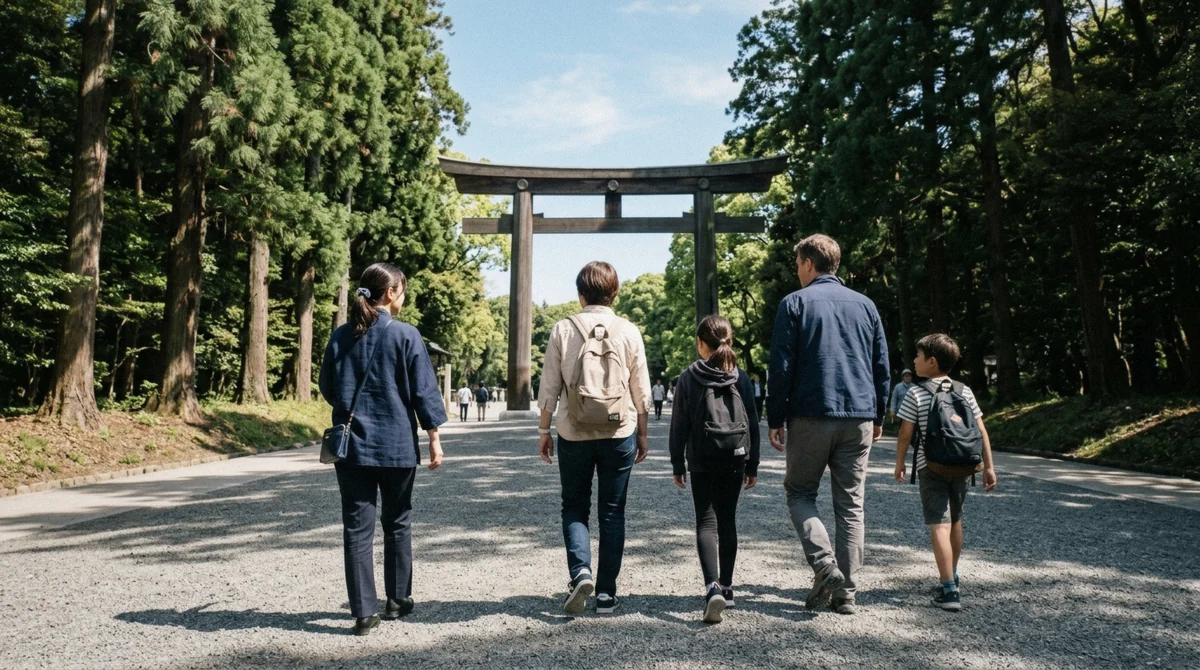
Two hours on a single flat route through Meiji Jingu's forest and Takeshita Street, with admission included and no vehicle involved at all. The gentlest option here for a child who tires of sitting.
$300 flat for up to five people, or the customized option from $137.59 per person, with the pace and stops built around your group. The safest bet for a family whose child's tolerance is genuinely hard to predict, since nobody else's schedule gets held up by a nap or a slow bathroom stop.
Which Tour Fits Which Age Bracket
If you have a toddler or preschooler, 0 to 4
the Hato Bus half-day is the easiest full day: four to four and a half hours, a fixed schedule, and children under 6 ride free without their own seat.
If your child is 5 to 8
the Hato Bus half-day still fits well, or the gentle two-hour Harajuku and Meiji Shrine walk if a shorter outing suits your day better.
If your child is 9 to 12
the full-day coach or the bike tour both open up at this age, once a child is close to or over the bike's 150cm height guideline.
If you have a teenager, 13 and up
every tour on the site is open to them except one: the go-kart ride is 18 and over by law, not by comfort.
If your family's pace is genuinely hard to predict
book the private car or a customized private tour; nobody waits on a fixed schedule while a nap, a meltdown or a slow bathroom stop plays out.
What the Tour Feels Like for a Kid
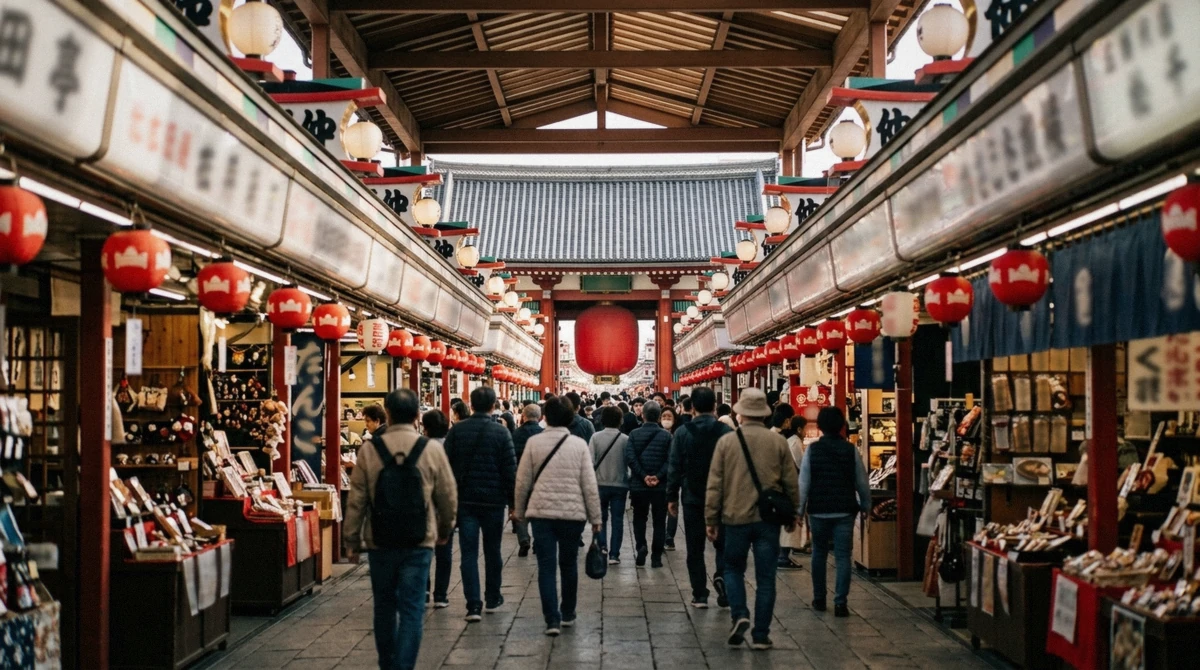
On the Hato Bus half-day, the first twenty minutes at the Imperial Palace outer garden are usually the highlight for a young child: walking distance is short, and the bridge and moat make an easy first photo stop. The middle stretch, riding to Tokyo Tower and standing in the Main Deck queue, is where a young child's patience gets tested first; the deck itself, 150 metres up, tends to land well once you're actually there. Senso-ji and Nakamise close out the morning, and this is usually the easiest stretch of the whole tour for a kid: walking, not sitting, past stalls selling snacks and toys, with real freedom to stop and look.
The full-day coach adds five more hours on top of that same shape, and its own listing already flags the honest trade-off for any traveler: the free time after lunch and at the Skytree runs long enough to feel padded even for adults. For a young child, that stretch is the one most likely to produce real boredom, worth planning a portable distraction around rather than assuming the view alone will carry the afternoon.
How Long Can Kids Actually Stay Engaged?
Attention span, not the clock, is what actually limits a young child's tolerance for a day like this. No age group loves every minute of it.
| Age band | Realistic attention window | What that means on a 9-hour coach day | Signs it's time for a break |
|---|---|---|---|
| Toddler (2 to 4) | 20 to 40 minutes at a stretch | Runs well past a toddler's real limit more than once; the 4 to 4.5 hour Hato Bus half-day is the honest match instead | Asking to be picked up, going quiet after being chatty, reaching for a parent |
| Young child (5 to 8) | 45 minutes to about an hour | Handles the Hato Bus morning well; the full-day coach's afternoon free time runs close to the edge | Fidgeting with a seatbelt or camera, asking how much longer |
| Older child (9 to 12) | Roughly 90 minutes to two hours | Fits the full-day coach comfortably, with the built-in stops working as natural breaks | Going quiet or short-tempered rather than restless |
| Teen (13 and up) | Close to adult tolerance | Any tour length works; the go-kart's 18-plus rule is the only real ceiling left | Reaching for a phone rather than the window |
Car Seats, Strollers and Getting Around
Car seats and booster seats
All three vehicle-based tours, the Hato Bus, the full-day coach and the private car, run in licensed commercial vehicles, the same category as a registered shuttle or taxi rather than a private family car. None of the listings on this site advertise a child car seat as standard equipment. If your child needs one, ask directly when booking, or bring a portable travel harness; don't assume one will be waiting on board, especially in the private car, which is a standard minivan with adult seatbelts throughout.
Strollers and baby carriers
A stroller works fine for the flat, paved stretches on the walking tours and at the Imperial Palace outer garden, but boarding steps on the Hato Bus and full-day coach, and the stairs and escalators inside busy stations like Shibuya and Asakusa, make a stroller genuinely awkward for parts of any full day. A soft carrier or a lightweight umbrella stroller that folds quickly handles both settings better than a full-size stroller. None of the tours mention a stroller storage policy, so ask your driver or guide about stowing a folded one for the day rather than assuming there's room.
What to Pack for Kids
Nothing on this site issues child-size gear beyond the bike tour's optional seat. Everything else is on the parent to bring or arrange.
- A refillable water bottle; convenience stores are everywhere but a hot coach day adds up in cost otherwise
- Sun protection sized for kids: a hat with a chin strap and sunscreen reapplied around midday, especially June through August
- Snacks matched to the tour length; nothing is included on any tour here
- Hand sanitizer or wet wipes for after Nakamise's food stalls and any Skytree or Tower deck railing
- A portable phone charger if photos are the day's main entertainment
- A light rain layer; the full-day coach and Hato Bus both run rain or shine
If a helmet or a child seat is part of your day, the bike tour collects both in cash on arrival, ¥1,000 (about $7) for the helmet and ¥3,000 (about $20) for the child seat, booked at least two days ahead.
Food and Restrooms on the Day
No tour on this site includes a meal, aside from the full-day coach's optional paid lunch add-on. Pack a real snack rather than relying on finding something mid-route, especially on the longer days. Nakamise's stalls near Senso-ji sell skewers, rice crackers and sweets that double as an easy kid-friendly snack stop on nearly every itinerary that passes through Asakusa.
Restroom access depends on the format. The Hato Bus and full-day coach both stop at proper facilities at each major site, the Imperial Palace garden, Tokyo Tower, Senso-ji, the Skytree, so a bathroom break lines up naturally with the sightseeing. On the walking tours, plan around each stop's own facilities rather than expecting one along the route itself; ask your guide early in a two-hour walk if a small bladder is a factor.
Too Young for the Go-Kart? What to Do Instead
The go-kart ride through Shibuya is the one hard age wall on this site, 18 and over with a physical driving licence, and no operator discretion changes that. It isn't much of a consolation to say so, but the Shibuya walking tour covers much of the same ground on foot, the Scramble crossing itself, Center-gai, and the Hachiko statue, at a pace any age can manage, and costs less besides. Watching a costumed group of go-karts pass through the crossing is also a genuine highlight for kids on any of the walking or bus tours that route through Shibuya, even without riding one.
The Tokyo Landmark Spotting Checklist
Print this or keep it open on a phone. It turns a long coach ride into a game instead of a countdown.
- Senso-ji's giant red lantern at the Kaminarimon gate
- Tokyo Tower or the Skytree observation deck
- Shibuya Crossing from above
- The stone bridge and moat at the Imperial Palace
- The wooden torii gate at Meiji Shrine
- Nakamise's rows of paper lanterns
- A costumed go-kart driving past, even if you're not old enough to ride one
- Hachiko's statue outside Shibuya Station
What If My Child Gets Bored?
It usually happens on the full-day coach, somewhere in the free-time stretch after lunch or at the Skytree, the same padded stretch the full tour breakdown already flags as running long for adults too. The fixes that actually work: the spotting checklist above, a snack timed to that exact stretch rather than earlier, and simply asking the guide what's coming next, most kids re-engage once they know an end point is close. If a child is genuinely done, there's no formal early-return option on a shared coach, the group moves together, but a private car sidesteps the problem entirely since the day is already built around your pace.
Starting with a shorter tour, the Hato Bus half-day or either two-hour walk, avoids the problem altogether for a child whose tolerance is hard to predict.
Best Time of Year to Bring Kids
November is the calmest month to bring a family, mild and dry enough that heat and rain both stay out of the way; our full month-by-month breakdown covers the rest of the calendar. If your dates are fixed for summer instead, plan around the heat rather than the calendar: an early tour departure helps most. The Shinjuku evening walk is worth booking for the adults once kids are down for the night; the operator's own listing says it isn't aimed at families with small children.
Only one tour on this site has a real age wall: the go-kart ride's 18-plus licence law. Everything else comes down to a child's own tolerance for a long day rather than a number on a ticket. The four-hour Hato Bus half-day and the two-hour walks are the safest bets for a young or unpredictable child, and the private car is the one to book if that unpredictability is the whole reason you're asking.
Browse the family-friendly Tokyo city tours we track before you lock in a date.
Frequently Asked Questions
What is the minimum age for Tokyo city tours?
Only one tour sets a hard minimum: the go-kart ride through Shibuya is 18 and over by law, since it requires a physical driving licence. Every other tour on this site has no stated age limit.
Can a 5-year-old join a Tokyo city tour?
Yes, on most of them. The Hato Bus half-day and the two-hour walking tours are the easiest fit at that age; the full-day coach's nine hours and the bike tour's 150cm height guideline are the two to think through first.
Do kids get a discount on any Tokyo tour?
Yes, on Hato Bus: children aged 0 to under 6 ride free without their own seat. No other tour on this site publishes a child rate.
Will my kid get bored on the full-day coach?
It's the tour most likely to test a young child's patience, mainly in the free-time stretch after lunch and at the Skytree that even adult reviewers flag as running long. The half-day Hato Bus tour or either two-hour walk are the shorter, safer bets for a child with a shorter fuse.
Do I need a car seat for the tour vehicle?
None of the operators supply one as standard. Bring a portable travel harness for a toddler, or ask your operator in advance what seatbelt setup their vehicle has.
Can I bring a stroller?
It works for the flat stretches, but boarding steps on the coaches and stairs inside busy stations make a soft carrier or a fold-quick umbrella stroller the more practical choice for a full day.
What if my child is too young for the go-kart tour?
There's no way around the 18-plus licence law, but the Shibuya walking tour covers the same crossing on foot at any age, and watching the costumed karts go by is a highlight in its own right.