Are Tokyo City Tours Worth It? An Honest Look
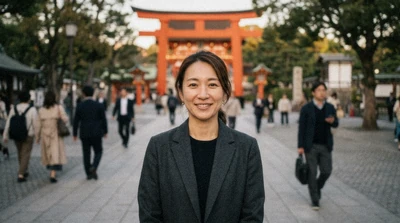
Are Tokyo city tours worth it? Yes, if you want the Imperial Palace, Senso-ji, Shibuya Crossing and one or two more landmarks arranged into a single day with an English-speaking guide doing the planning. No, if you already know Tokyo's trains and would rather set your own pace for the same money. Ten guided options run this city right now, from a $25 two-hour walk out of Shibuya Mark City to a $300 flat-rate private car for up to five people, and the honest differences between them are what most listings leave out: what each fee buys, which tours pad their schedule, and the one landmark every itinerary gets you to the gate of and no further. This guide breaks that down tour by tour. For the full lineup, see Tokyo city tours compared side by side.
Quick answer
Yes, if you want three or four Tokyo landmarks bundled into one paid, English-guided day and don't mind a fixed schedule. No, if you'd rather explore alone or already know the trains. Tours here run from $25 for a two-hour neighborhood walk to $300 flat for a private car, and the best value of the group, the Hato Bus half-day, covers the Imperial Palace, Tokyo Tower and Senso-ji in four hours for $39.
Key takeaways
- Price spans $25 for a two-hour Shibuya walk to $300 flat for an up-to-five private car, with nothing in between costing more than $138
- Best reason to book: the $121.88 full-day coach fits the Imperial Palace, Meiji Jingu, Senso-ji and the Skytree Tembo Deck into one paid day with the ticket included
- Biggest honest downside: every Imperial Palace stop is the outer garden, never inside the grounds, and no tour anywhere gets past Nijubashi Bridge
- Skip a group tour if you already know Tokyo's subway or want to set your own stopping time at each landmark
- Morning departures beat afternoon ones on every route: Senso-ji and the Skytree deck both fill up after lunch
- Every tour on this list cancels free up to 24 hours before departure, so booking early costs nothing to hold a place
The Short Answer
Ten guided options run the Tokyo landmark circuit right now, and none of them is a bad tour on its own; the question is whether the format fits your day. A seated bus or coach earns its price when you want the Imperial Palace, a temple and a tower stop arranged for you, ticket included, with nothing left to plan. It stops earning that price the moment you would rather wander Shibuya's back lanes at your own pace, because that is exactly the one thing no coach seat gives you.
- Worth it if: you have one clear block of time, four hours or a full day, and want it filled without building the route yourself
- Worth it if: you want an included entry ticket, since only two of the ten tours bundle one in: Skytree on the coach day, Tokyo Tower on the Hato Bus morning
- Worth it if: you're travelling with children under six or need step-free access, since the Hato Bus route is listed as wheelchair accessible and lets under-6s ride free
- Skip it if: your budget caps out well under $25 per person for anything beyond a walk you could do free
- Skip it if: you already know Tokyo's subway map and would rather stop and linger than move to a schedule
- Skip it if: you specifically want the Imperial Palace's inner grounds, since no tour on this list, or any tour in Tokyo, gets past the outer garden
What It Actually Costs
| Option | Typical price | Duration | Best for |
|---|---|---|---|
| Neighborhood walk | from $25 | 2 hours | A tight budget and one district done properly |
| Half-day Hato Bus | from $39 | 4 to 4.5 hours | A fast first morning, Tokyo Tower ticket included |
| Private walking day with a guide | from $93.81 | 7 hours | A personalized route built around you |
| Full-day coach | from $121.88 | 9 to 10 hours | One day covering the most ground, Skytree included |
| Private car, up to five people | $300 per group | 8 to 9 hours | Three or more people travelling together |
Most solo travelers land near $25 to $39 for a single guided morning, and a group of three or more splitting the $300 private car often pays less per person than three separate coach seats at $121.88 each. What moves the total isn't really the tour type, it's whether an entry ticket rides along: the coach's Skytree admission and the Hato Bus's Tokyo Tower ticket both save a stop at a separate ticket window later in the day.
What You Get for the Money
A typical day starts with a pickup, not a ticket line. The half-day Hato Bus collects riders at Tokyo Station or Shinjuku Station East Exit before eight in the morning; the full-day coach leaves Matsuya Ginza at 7:20 or the LOVE sculpture in Shinjuku at 7:50. From there a nationally certified guide runs the schedule for the next four to ten hours.
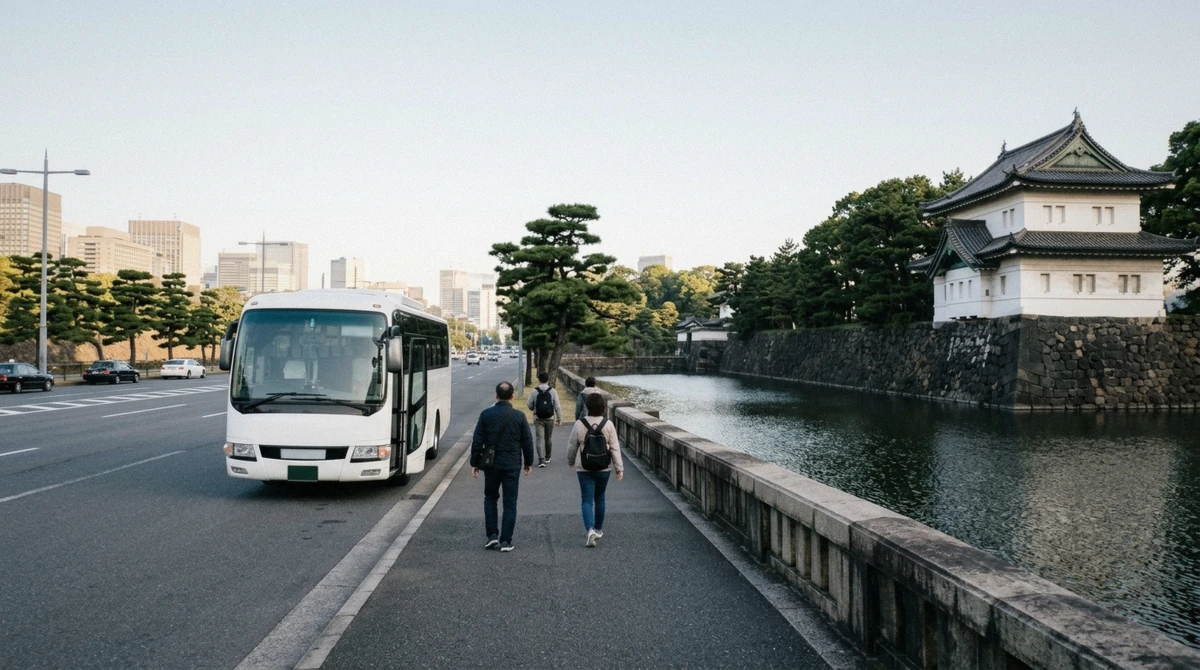
The Imperial Palace stop is the one every tour and private guide on this list handles the same way, and it's worth explaining properly once. The Emperor's household still lives on the inner grounds, so no tour, no private car and no walking guide gets past the outer garden. What you actually get is the walk to Nijubashi Bridge, the two-arched stone crossing reflected in the moat, past the statue of the loyalist general Masashige Kusunoki, or a stop at the East Garden built on the old Edo Castle site. Operators state this limit plainly on their own listings now, which is more than most third-party blogs bother to do, but it still catches people who pictured walking into a palace interior.
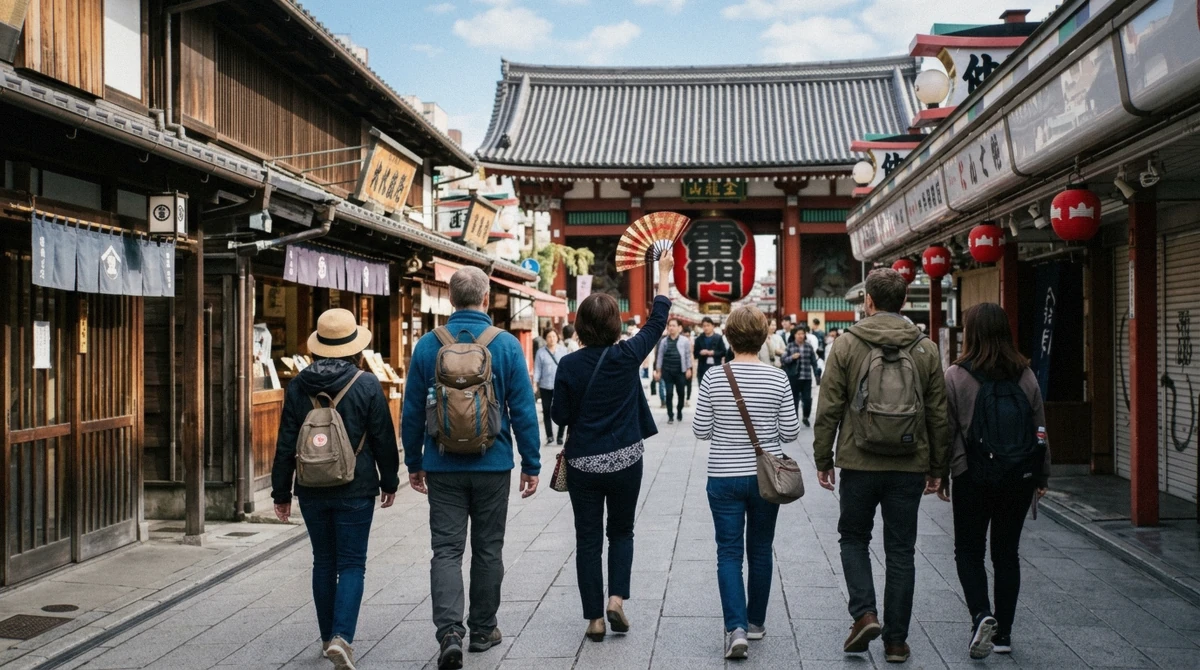
From there the day fills out with specific, real stops: Senso-ji's roughly 200 metres of Nakamise stalls under paper lanterns leading to Tokyo's oldest temple, the Tokyo Tower Main Deck at 150 metres on the Hato Bus route, or the Skytree's Tembo Deck at 350 metres with a skip-the-line pass on the full-day coach. The coach adds Meiji Jingu's walk under the torii into a 70-hectare planted forest, a matcha tasting in Asakusa, and a short ferry under Rainbow Bridge.
What the ticket price covers is the coach or car, the guide, and whichever entry fee is named on that tour's own listing. What it doesn't cover: food beyond the coach's optional lunch, personal shopping, and hotel drop-off on most routes. Budget an extra ¥1,000 to ¥3,000 in cash for the smaller add-ons, a bike tour's helmet rental or a go-kart's insurance surcharge, if that's the tour you book.
Pros and Cons, Honestly
What we genuinely like
- English-guided options at every price point, $25 to $300
- Two of ten tours bundle a paid entry ticket into the price (Skytree, Tokyo Tower)
- Free cancellation up to 24 hours before departure across the lineup
- The Hato Bus route and two of the walking tours are wheelchair accessible
The honest downsides
- Nine of ten tours run on a fixed group schedule, not your pace
- Every Imperial Palace stop is the outer garden only, never the inner grounds
- The best-reviewed full-day coach still pads its last two hours with free time reviewers flag as slow
- Extra costs, a helmet, a child seat, an insurance surcharge, stack on top of the ticket price for some tours
Who it's NOT for: confident, experienced Tokyo visitors who'd rather build their own route. The [self-guided option](/on-your-own/) fits them better than any tour here.
The Honest Downsides
What regular reviewers actually flag, roughly in order of how often it comes up:
- The full-day coach's last two hours run long. Reviewers who mark it down cite the short ten-minute bay ferry and the free time after lunch and the Skytree that stretches past what the stops need; the four-hour Hato Bus avoids this entirely.
- The coach also swaps the bay ferry for Hamarikyu Gardens or the Fukagawa Edo museum every Tuesday and in bad weather, with no refund for the change; check the day of the week before you book if the ferry is the reason you're going.
- The Imperial Palace stop disappoints people who expected an interior visit. Listings state the limit plainly now, but it's still the single most common source of pre-booking confusion on this itinerary.
- Go-kart and bike tours carry real cash add-ons on the day: a ¥1,000 insurance surcharge for the kart, a ¥1,000 helmet or ¥3,000 child seat for the bike. Bring yen, since these aren't always billed to a card at booking.
- Nine of the ten tours move on a group's schedule, not yours. A private car or guide fixes that, but at several times the price of a seat on a coach.
When It's Worth It Most
Spring earns its reputation here: cherry blossoms peak around the end of March, with the bloom window running from late March into early April, and the outdoor stops, the Imperial Palace moat, Meiji Jingu's forest, Shinjuku Gyoen on the bike route, all look their best against it. Autumn's clearer, drier air from October into November is the other strong pick, especially for anyone doing the go-kart or bike routes in the open air.
Morning departures beat afternoon ones on every route: Senso-ji's Nakamise stalls and the Skytree deck both fill up after lunch. The two stretches to avoid booking around are Golden Week (29 April to 5 May) and Obon in mid-August, Japan's own domestic travel peaks, when the same coaches run fuller and hotel prices near every pickup point climb with them.
Who Should Do It, and Who Should Skip It
Match your trip to the tour, not the other way round:
If you're traveling with kids under six or need a wheelchair-accessible route
book the half-day Hato Bus, where under-6s ride free and the route is listed as accessible
If this is your first morning in Tokyo and you want your bearings
take the half-day bus before exploring alone for the rest of the trip
If you're on a tight budget or traveling solo
book a $25 neighborhood walk instead of a bus seat
If you're three or more people who want one flat fare
look at the private car or guide before pricing out separate coach seats
If you want to try Tokyo's streets rather than just see them from a bus
the go-kart ride through Shibuya is the one experience-first option here, 18 and over with a physical International Driving Permit
Doing It on Your Own
None of this rules out skipping a tour altogether. Tokyo's subway reaches every stop on this list, and a confident independent traveler with an IC card and a day to spare covers the same ground for the cost of train fares and entry tickets alone. We lay out exactly how far that gets you, and where it stops working, in Tokyo without a tour.
How to Book Without Overpaying
Every tour on this list cancels free up to 24 hours before departure, which means the smart move is booking as soon as your dates are fixed rather than waiting to see if a better slot appears. You lose nothing by holding a place early, and Golden Week and Obon departures genuinely do sell out.
| Tour | Best for | Price |
|---|---|---|
| Half-day Hato Bus | First-timers wanting an orientation morning | $39 |
| Full-day coach | One day, maximum ground covered | $121.88 |
| Private car, up to five | Families or groups of three or more | $300 per group |
| Shibuya walk | Budget travelers and solo pace-setters | $25 |
If you're deciding between the two buses, here's the read from someone who's ridden both more times than she can count:
Questions About Whether a Tokyo Tour Is Worth It
How long do Tokyo city tours take?
From 2 hours for the Shibuya, Harajuku and Shinjuku walks to 9 to 10 hours for the full-day coach. Most first-time visitors land in the middle, at the Hato Bus's 4 to 4.5-hour morning or a 7-hour private walking day.
How far in advance should I book a Tokyo city tour?
As soon as your dates are fixed. Every tour on this list cancels free up to 24 hours before departure, so early booking costs nothing to reserve, and departures near Golden Week and Obon do sell out closer to the date. The booking slips that actually cost people money are collected in the Tokyo tour mistakes guide.
Can I see Tokyo without booking a tour at all?
Yes, largely. The subway reaches every landmark these tours visit, and a confident traveler with a day to spare can cover the same ground independently. See Tokyo without a tour for exactly how far that gets you and where it doesn't.
Is the full-day Tokyo coach tour too long?
For some travelers, yes. At 9 to 10 hours it's a genuinely long sit, and reviewers who mark it down point to the padded free time after lunch and at the Skytree. If a full day sounds like too much, the 4-hour Hato Bus covers three of the same core stops.
Are Tokyo city tours worth it for young kids?
The half-day Hato Bus works well for families: children aged 0 to under 6 ride free without a seat, and the route is listed as wheelchair accessible. The Shinjuku night walk, by contrast, is not aimed at families with small children. The full family picture, ages and stroller logistics are in Tokyo city tours with kids.
Is a private guide or a group tour better value in Tokyo?
It depends on group size. A flat $300 private car usually beats separate coach seats once three or more people travel together. Solo travelers and couples generally come out ahead with the $121.88 coach, the $39 half-day bus, or a $25 neighborhood walk instead. The complete break-even math is in private vs group tours in Tokyo.
Ten tours, one city, and the honest split comes down to how much of the day you want handed to someone else. Hand it over completely and the full-day coach or a private car earns every yen. Keep some of it and the half-day bus or a $25 walk does the job for a fraction of the price.
Compare every fare and finish time side by side before you book.